The most common GEO mistakes, the ones you should fix before spending another dollar on content production, fall into six categories that hold up across multiple sources. No schema markup, weak or missing entity signals, single source topical authority, over reliance on keyword ranking tactics that AI engines do not use for citation decisions, poor content structure for passage retrieval, and missing or unattributed statistics that reduce your citability.
Mistakes that appear consistently across independent research and documentation come first, because those are the ones most likely to be costing you AI citations right now. Mistakes supported by a single source or a narrower set of signals come later, with a note on how much weight to put behind them.
Detecting whether you have committed any of these mistakes requires a structured diagnostic lens, not a gut check. We introduce that lens here and build it out fully in the final section, so you can run it against your own content before you prioritize fixes.
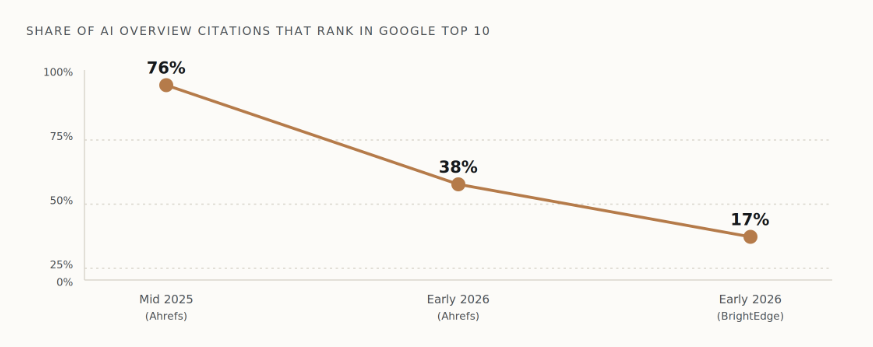
Traditional SEO built around keyword ranking is insufficient for AI citation visibility. Google rankings do not reliably transfer to AI generated answers.
The signals that move you up a search results page, backlink volume, keyword density, click through rate, are largely invisible to the retrieval logic that Perplexity, Google AI Overviews, and ChatGPT use when deciding whose content to cite. If your GEO strategy is still built around rank improvement as the primary signal of progress, that is the first mistake on this list, and fixing it changes every other decision you make.
| Mistake | Evidence | Detection | Fix Effort | Citation Impact | Priority |
| Blocking AI crawlers in robots.txt | High | Easy | Very Low | Very High | Critical |
| Thin or generic content without substantive detail | High | Easy | Medium | High | Critical |
| Missing or incomplete Schema.org markup | High | Easy | Low | High | Critical |
| Inconsistent entity information across the web | High | Medium | Medium | High | High |
| Unstructured content that AI engines cannot parse | High | Easy | Low | High | Critical |
| Stale or undated content | Medium | Easy | Low | Medium | Medium |
| Weak or missing statistics and sourced claims | Medium | Easy | Medium | Medium | Medium |
| Measuring GEO performance by click through rates alone | High | Easy | Low | High | High |
| Relying on first party content instead of earning third party citations† | High | Hard | High | Very High | Strategic |
Mistake 1: Blocking AI crawlers through robots.txt
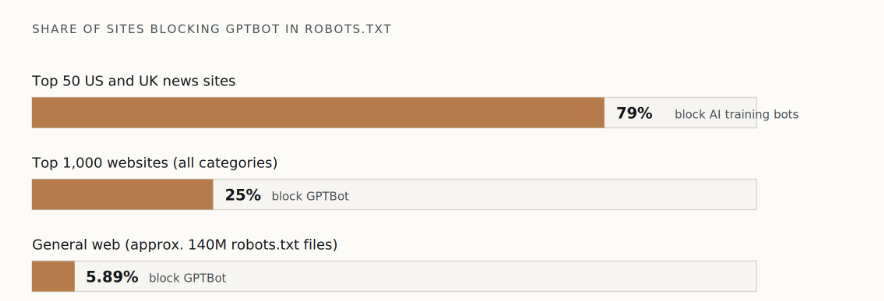
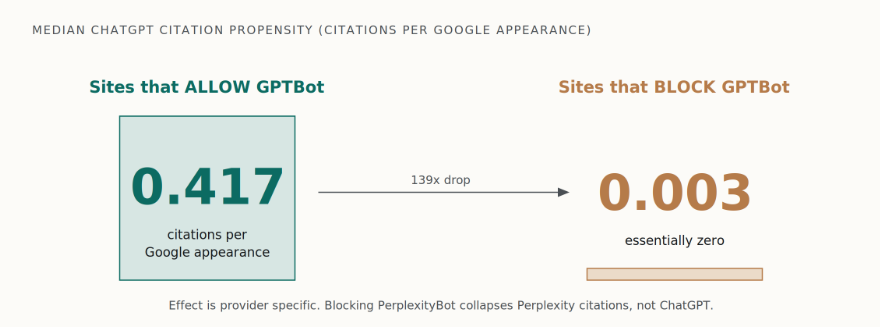
Blocking AI crawlers in robots.txt eliminates citation probability regardless of how strong your content is, if GPTBot, ClaudeBot, or PerplexityBot hits a disallow rule, the engine never ingests the page and cannot cite it. The mechanism is direct.
A single disallow entry for any of these bots in your robots.txt file removes that content from the generative engine’s index entirely. JavaScript heavy, client side rendered sites compound this problem even without an explicit disallow rule.
AI crawlers largely cannot process client side rendering the way a browser does, so the content never reaches them.
Detection
To check your exposure:
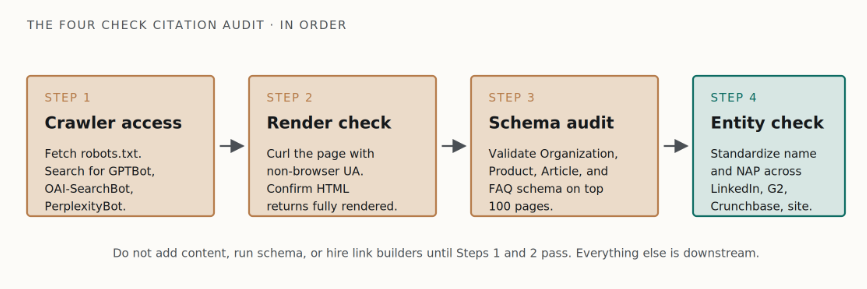
- Fetch yourdomain.com/robots.txt and search for GPTBot, ClaudeBot, and PerplexityBot in the disallow list
- Run a server side rendering test to confirm your pages return fully rendered HTML to a non browser user agent
- Check staging and legacy subdomains, not just the primary domain
The Enterprise Risk
Legacy CMS configurations are the highest risk failure mode here. A robots.txt file written years ago often contains wildcard disallow rules that silently block AI crawlers with no deliberate decision behind them, the team that added the rule is long gone, and no one audited it when GEO became a priority.
If your content investment is not producing AI citations and you have not checked robots.txt first, that is the first audit item, not a content quality review. Every dollar spent on content production returns zero citation value if the crawlers cannot reach it.
Mistake 2: Using thin or generic content without substantive detail
Limited or generic content fails the AI citation bar because LLMs select sources by token efficiency. Every token that carries no verifiable fact or specific claim is a token that could have been used to answer the query, and AI engines do not cite pages that waste that space.
Filler marketing language, phrases like “industry leading quality” or “best in class service,” contributes zero citable information. An LLM processing your page will skip those tokens and look for the next passage that answers something.
Keyword density patterns compound the problem. Forcing a target phrase into a sentence three extra times adds no new claim, so each repetition lowers the information to filler ratio on that page and reduces the probability that any passage on it gets pulled into a generated answer.
The detection audit
To audit a page, read each paragraph and ask one question. Does this sentence contain a specific, verifiable claim?
Run that check across the page and mark every sentence that contains only adjectives, brand language, or rephrased variations of the headline. If more than a third of the sentences fail that test, the page is below the citation threshold.
The SMB failure mode
The most common version of this mistake in practice is copying manufacturer product descriptions verbatim. That copy was written to sell, not to inform, so it is dense with marketing adjectives and light on specifications, comparisons, or use cases.
An AI engine has no reason to cite it when a manufacturer’s own spec sheet or an independent review provides the same facts with more precision. The fix is to replace at least the first three paragraphs with content that states specific claims.
Mistake 3: Missing or incomplete schema markup
Without schema markup, AI engines must guess what your brand, product, or article is, and that guesswork reduces citation confidence and increases the chance of inaccurate or missing attribution. Schema gives AI systems the structured signals they need to identify and disambiguate entities without inference.
Four schema types carry the most weight for GEO:
- Organization schema, establishes your brand as a named, addressable entity
- Product schema, ties specific products to your domain with attributes AI can read directly
- Article schema, signals authorship, publication date, and topical scope
- FAQ schema, functions as a discrete citation signal because it presents question and answer pairs that AI engines can lift verbatim for response generation.
FAQ schema is worth treating separately from the others. It is not just a structured data type.
It maps your content directly to the question and answer retrieval pattern AI engines use to construct responses. Pages without it are structurally invisible to that retrieval layer.
Detection and the Enterprise Gap
The fix starts with a schema validator run against your highest priority pages, checking for each of the four types above. For most sites, that is a one hour audit.
The enterprise failure mode is different. Large sites with thousands of pages rarely audit schema completeness at scale, which means product and brand entity markup is missing on long tail pages that still attract AI driven research queries.
Read about our enterprise GEO work
At that scale, unaudited schema debt silently bleeds citation share across the full catalog, not just the homepage. Running a crawl level schema audit quarterly is the only way to catch it before it compounds.
Mistake 4: Inconsistent entity information across the web
Inconsistent entity information across the web reduces AI citation likelihood because AI models build a confidence score around your brand by reading co occurrence signals, how often your name appears alongside authoritative entities in a consistent way. When your brand name appears as three different variants across LinkedIn, G2, your homepage, and third party directories, the model cannot consolidate those signals into a single high confidence entity profile.
The data points that create ambiguity are predictable:
- Brand name variants (“Acme”, “Acme Inc”, “Acme Digital”) across profiles and listings
- Product name inconsistency between your site, review platforms, and press mentions
- Mismatched NAP data (name, address, phone) across directories and social profiles
To audit this, search your brand name and your top product names across LinkedIn, G2, Crunchbase, and your site’s About page in a single session, then flag every variant. Pronoun overuse in copy compounds the problem.
A page that refers to your company as “we” and “they” and “the company” in the same paragraph gives AI models three competing entity signals to reconcile. This mistake also compounds with missing schema, creating a double failure where the AI engine has no structured machine readable identity signal to fall back on AND noisy unstructured co occurrence data to sort through.
Fix the inconsistency before you add schema, because schema that references a brand name that does not match your directory listings locks the dispute in rather than resolving it. Audit your entity footprint first, standardize every name and NAP entry, then deploy Organization schema with that single canonical brand name.
Competitors who audit only on page signals miss the off site co occurrence layer entirely, which is where the citation decision is often made.
Mistake 5: Unstructured content that AI engines cannot parse
AI engines skip pages where the answer is buried. Structured content using headers, bullet points, and a direct answer in the opening block is what makes a page parseable and citable by LLMs. A page that opens with brand voice and buries the factual answer three paragraphs in gets passed over, not because the information is missing, but because the retrieval system cannot locate it cleanly.
This is a GEO mistake, not a style preference. An AI engine making a citation decision in milliseconds pulls from the first extractable passage that answers the query.
If your opening block is promotional framing instead of a direct factual answer, you have already lost the citation.
Structural elements that improve parseability
Three elements determine whether an AI engine can parse and cite a page:
- Descriptive H2 and H3 hierarchy that signals what each section answers
- Bullet points for lists, comparisons, and step sequences
- Answer first opening blocks where the direct factual answer appears in the first paragraph, not after context setting
Detection signal
Audit each key page by asking one question. Does the first paragraph contain a direct factual answer to the page’s primary query?
If the answer is no, that page is a citation risk. Also check whether your header hierarchy describes content specifically, as generic headers like “Overview” or “About Us” give AI engines nothing to index semantically.
The SMB failure mode
The most common version of this mistake for smaller brands is brand voice first copy. Opening paragraphs that lead with mission statements, founding stories, or positioning language.
That copy may resonate with a human reader who scrolls. It does not give an LLM an extractable answer, which means your content investment produces no AI citation return.
Fixing the opening block costs less than a single new content brief and has the highest per fix impact on citation likelihood of any structural change.
Mistake 7: Stale or undated content
Stale or undated content gets deprioritized by AI engines, especially on fast moving topics like GEO where the training data and citation patterns shift every few months. AI engines favor sources that show visible recency signals.
A page with no publication date or a last modified timestamp from two years ago signals lower reliability on an evolving topic, and a competitor page updated last quarter will win the citation instead.
The Evergreen Exception
Not every page needs a quarterly refresh. Tutorials that walk through a stable process, and definitions that do not change as the field evolves, can hold citations without frequent updates because their accuracy does not depend on recency.
The practical test. Ask whether a reader would need a newer version to act on the content.
If yes, the page needs a cadence. If no, the evergreen label fits and you can deprioritize it.
Detection and Fix
Audit your key GEO pages against the competitor pages currently being cited for the same queries. If competitor pages carry a more recent last modified date, recency is likely the gap you are losing on.
The fix has two parts:
- Add visible publication and last updated dates to every page competing for AI citation
- Set a quarterly review cadence for any GEO content covering topics where AI engine behavior is still shifting
GEO optimization is an ongoing iterative process, not a one time effort, because AI engine behavior and training data evolve. Pages you optimized six months ago may have drifted out of citation because the engines updated, not because your content was wrong.
Budget a review cycle the same way you budget for technical audits, as a recurring line item, not a one off project.
Mistake 8: Weak or missing statistics and sourced claims
Unsourced statistics reduce your citability because AI engines cannot corroborate claims they cannot trace, and Writesonic reports that pages with named sources and verifiable data are cited more often than pages built on bare assertion. The mechanism is structural.
A citable statistic carries three components:
- A named source (the organization or study that produced the data)
- A date (so AI engines and readers can assess freshness)
- A methodology reference (enough context to assess how the number was produced)
- A claim without all three is, from an AI engine’s perspective, an assertion, not evidence.
Detection Audit
Audit your key claims by scanning each one for those three components.
The Fix for SMBs Without In House Research
Third party data partnerships are the practical route if you cannot run your own studies. License a dataset, cite an industry report, or co publish with a research firm.
The cited entity does the methodological work. You get the sourced statistic.
Author Credentials as an Authority Signal
On the question of whether author credentials function as a GEO authority signal, sources split. One side holds that disclosed author expertise, institutional affiliation, and publication history give AI engines additional corroboration that a page is authoritative.
The other holds that AI citation decisions are driven by content signals, not byline metadata, and that credentials are irrelevant to how engines select passages. We have seen no resolution between these two positions.
What is not disputed is that building external authority through citations, PR signals, and references from recognized entities is necessary for AI citation, regardless of where you land on the credentials question.
Mistake 9: Measuring GEO performance by click-through rates alone
CTR is the wrong primary metric for GEO because AI citations frequently surface your brand as the answer without sending a click at all. When ChatGPT or Perplexity cites your content in a response, the user reads your answer inside the AI interface and moves on.
No click is recorded, no session appears in GA4, and your organic CTR dashboard shows nothing, even though your brand just influenced a buying decision. GEO success is measured by citation frequency in AI generated responses, not by ranking position or click volume. That is the correct primary metric.
Platforms to Monitor
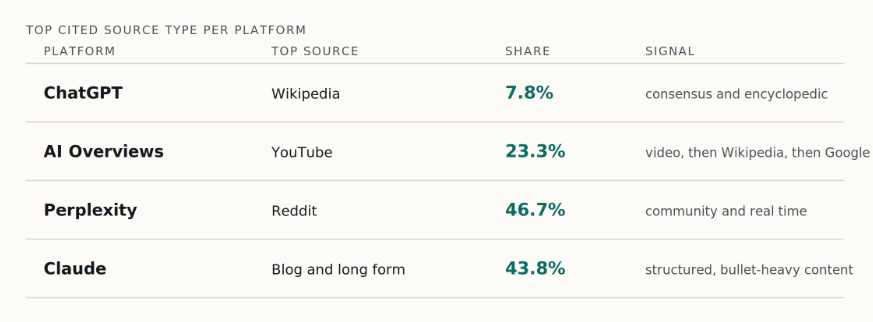
Track citation frequency across each of these separately:
- ChatGPT, conversational and product research queries
- Perplexity, research and comparison queries with cited sources
- Google AI Overviews, informational queries with direct answer extraction
Each platform selects sources using different signals, so a page cited consistently in Perplexity may not appear in Google AI Overviews at all. Monitoring one platform and generalizing is a measurement error that will send you optimizing the wrong surface.
The Fix
Decouple your GEO reporting from your organic CTR dashboard entirely and run a citation frequency monitoring protocol alongside it. One competitive edge that most GEO monitoring setups miss.
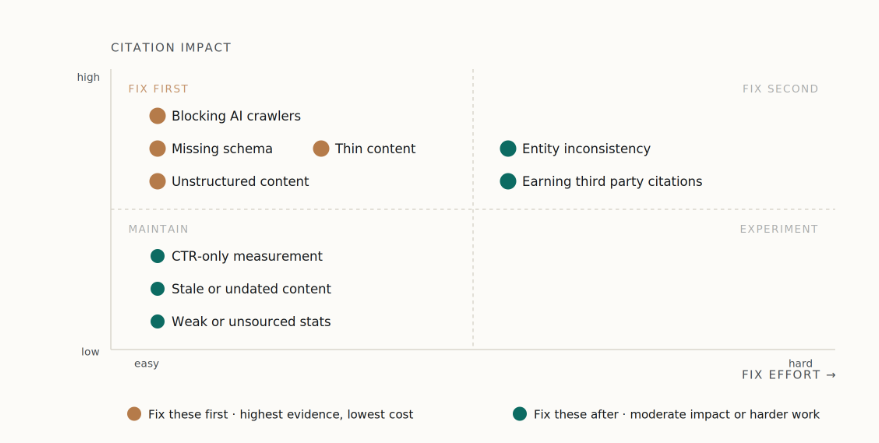
Ranking your tracked mistakes by their actual citation drop impact, rather than auditing them all equally, lets you allocate remediation budget where the pipeline exposure is largest first.
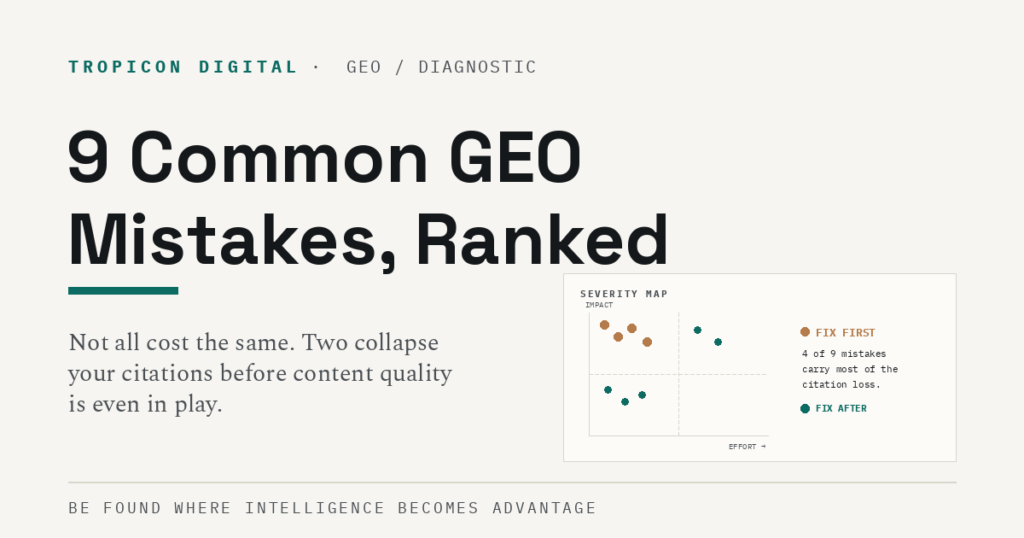
The 9 mistakes in this guide are not equal, and that is the point. Some of them, blocking AI crawlers, missing schema, inconsistent entity data, have clear mechanisms and show up repeatedly across independent sources.
Fix those first, because the citation cost is direct and the fix is bounded. You can scope the work, assign it, and know when it is done.
Others, like certain content freshness signals or structural parsing patterns, are supported by a narrower evidence base. Test those on a controlled set of pages before you reallocate budget to them at scale.
Spend in proportion to the evidence. That is the allocation discipline this map is built to support. If you are a founder or CMO deciding where your content team spends the next quarter, this evidence breakdown tells you which fixes protect pipeline now and which ones are worth a small, bounded experiment first.
The diagnostic in the final section lets you run that triage against your own site.